Best Armless Ergonomic Office Chairs of 2026
* We independently evaluate all recommended products and services. If you click on links we provide, we may receive compensation—transparency that helps you understand potential conflicts of interest.
Armless ergonomic office chairs eliminate shoulder and neck strain by removing obstruction from your workspace, letting you maintain neutral posture naturally. These chairs suit remote workers and students who need maximum flexibility to reach items without repositioning. The standout feature is unrestricted movement—you can shift positions, cross your legs, or access desk items without armrests getting in your way. One limitation: they offer less arm support than traditional chairs, which matters if you have shoulder instability. Pro tip: pair an armless chair with a desk-mounted monitor arm to reduce reaching strain and maximize the chair’s postural benefits.
At a Glance: Our Top Picks
Top 4 Products

Sweetcrispy Ergonomic Mesh Office Desk Chair
• Best Swivel Office Chair
Sweetcrispy Small Office Desk Chair, Ergonomic Low-Back Mesh Rolling Work Swivel Chairs with Wheels, Armless Comfortable Seat Lumbar Support for Home, Bedroom, Study, Student, Adults,Classic Black
The Sweetcrispy Ergonomic Mesh Office Desk Chair keeps your back aligned with a Y-shaped mesh backrest that contours to your lower spine’s natural curve, reducing pressure buildup during 8+ hour workdays. It suits budget-conscious professionals and students who want decent lumbar support without premium pricing. The standout feature is the removable, washable cushion—rare at this price point, it extends chair life significantly in dusty or pet-filled homes. One limitation: the mesh breathability doesn’t match higher-end chairs, and some users report it sags after 18+ months of daily use.
What We Like
- ✓ Easy assembly
- ✓ Adjustable height
- ✓ Lightweight and portable
- ✓ Bright color options
- ✓ ✓ Comfortable for short use—ideal if you’re primarily desk-bound for 2-4 hour stretches rather than all-day sitting.

OLIXIS Criss Cross Adjustable Office Chair
• Best Leather Office Chair with Wheels
OLIXIS Criss Cross Chair with Wheels Wide Cross Legged Office Desk Vanity Chair Comfy Fabric Armless Adjustable Swivel for Home Computer Task Fabric Beige
The OLIXIS Criss Cross Adjustable Office Chair features a wide, cushioned seat engineered for cross-legged sitting, making it exceptionally versatile for both work and casual home seating. It suits flexible workers, content creators, and anyone needing a chair that transitions from desk duty to living room accent piece without looking out of place. The standout feature is optional foot pads that lock the chair in place—essential for hardwood floors where rolling becomes a frustration rather than a benefit. One limitation: the armless design means no phone cradling or arm rest during breaks, which some users miss during 10+ hour workdays.
What We Like
- ✓ Easy assembly
- ✓ Wide, comfortable seat
- ✓ Adjustable height
- ✓ Supportive padding
- ✓ ✓ Durable PU leather surface resists daily wear, spills, and pet scratches far better than fabric, requiring only a quick wipe-down rather than deep cleaning.

Sweetcrispy Small Armless Office Desk Chair
• Best Office Chair with Lumbar Support
Sweetcrispy Small Office Desk Chair – Armless PU Leather with Comfy Lumbar Support, Height Adjustable Rolling Swivel Task for No Arms, for Adult, Student, Bedroom, Home, Vanity, Black
The Sweetcrispy Small Armless Office Desk Chair packs high-density foam and breathable PU leather into a compact frame, keeping you cool and supported across 4-6 hour work blocks in tight bedrooms or dorm rooms. It suits students, small-space dwellers, and anyone needing a chair that won’t dominate a 10×10 room while still delivering real lumbar reinforcement. The standout feature is the adjustable height range (17.7″ to 21.4″)—tight enough to accommodate petite users and standard desks where most armless chairs gap uncomfortably. One limitation: the 250-pound weight capacity is lower than executive alternatives, excluding heavier users. The 360° swivel mechanism means you can grab items across your entire desk orbit without strain.
What We Like
- ✓ Easy assembly
- ✓ Comfortable cushions
- ✓ Sturdy and durable
- ✓ Adjustable height
- ✓ Compact size
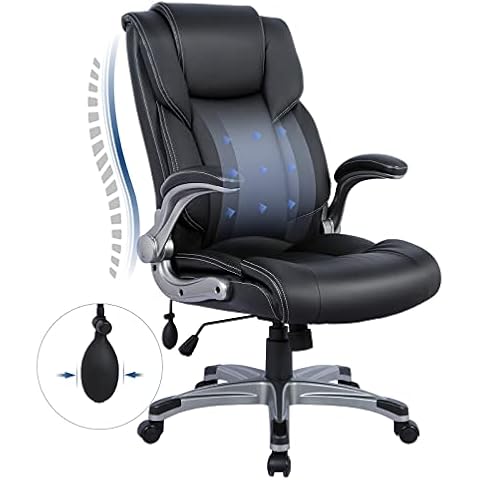
COLAMY High Back Executive Office Chair
• Best Office Chair for Gaming
COLAMY High Back Executive Office Chair – Padded Leather Ergonomic Computer Desk Chair with Inflatable Lumbar Support & Flip-Up Arms, Adjustable Tilt Lock Swivel Task Chair for Home Office, Black
The COLAMY High Back Executive Office Chair combines bonded leather durability with inflatable lumbar support you can customize to your spine’s exact contours, making it adaptable across different body types and comfort preferences. It suits executives, remote workers, and anyone needing a chair that looks boardroom-ready while handling long days without visible wear. The standout feature is flip-up armrests that vanish when you need open space but lock down for arm support during focused work—the flexibility other chairs lack. One limitation: bonded leather ages differently than genuine leather, showing wear patterns in high-friction areas after 3-4 years despite scratch resistance. The 275-pound capacity and tilt-lock function give stable positioning for extended conference calls.
What We Like
- ✓ Comfortable cushioning
- ✓ Easy assembly
- ✓ Adjustable lumbar support
- ✓ Stylish design
- ✓ Sturdy construction
What to Look for When Choosing
Selecting the right armless ergonomic office chair requires understanding several key factors that directly impact your comfort, health, and productivity throughout the workday. The most critical consideration is the chair’s lumbar support system, as armless designs place greater emphasis on spinal alignment without the distraction of armrests. Look for chairs with adjustable lumbar curves that allow you to customize the lower back support to match your spine’s natural contours. This feature becomes especially important during extended sitting sessions, as inadequate lumbar support can lead to lower back pain and poor posture habits. Premium models often feature memory foam or dynamic lumbar adjustment systems that conform to your body shape over time, providing personalized support that generic designs simply cannot match.
The seat height range and cylinder quality deserve serious attention when evaluating armless office chairs. Your feet should rest flat on the floor with your thighs parallel to the ground when properly positioned, which requires a chair whose height adjustment accommodates your specific dimensions. Check the specifications for minimum and maximum seat heights to ensure the chair aligns with your desk setup. Additionally, investigate the pneumatic cylinder quality, as cheap cylinders fail quickly and may develop the dangerous “chair dropping” issue where the seat suddenly descends. Reputable manufacturers use higher-grade cylinders rated for thousands of adjustments, ensuring your chair maintains its height position reliably for years. This seemingly minor component significantly impacts both safety and long-term value.
Material composition directly affects durability, breathability, and maintenance requirements for your armless office chair. Mesh backs offer superior ventilation compared to solid materials, making them ideal for warm climates or users who work extended hours without frequent breaks. However, mesh requires regular cleaning to prevent dust accumulation in the weave. Fabric seats provide comfort but can trap heat and may show wear patterns over time. Leather or synthetic leather options deliver a professional appearance and easy cleaning but tend to be less breathable. Consider your office environment, climate, and personal preferences when evaluating materials. The best choice balances comfort, durability, and maintenance demands based on your specific situation rather than following general recommendations.
Base stability and wheel quality often get overlooked despite their importance in preventing accidents and enabling smooth movement. Armless chairs lack the counterbalance that armrests provide, making a stable five-point base with quality casters essential for safety and mobility. Examine the wheel material carefully—soft-roll casters suit hardwood floors and prevent damage, while hard wheels work better on carpet. The chair’s overall weight capacity should exceed your body weight by at least thirty pounds to account for dynamic movement and ensure structural integrity. Test the chair’s rolling smoothness if possible, as squeaky or stiff wheels indicate poor construction and will frustrate you daily. A well-engineered base with smooth, appropriate casters makes the difference between a chair that feels responsive and stable versus one that feels wobbly or difficult to reposition.
Common mistakes when choosing armless office chairs include prioritizing style over function and ignoring adjustability options. Many buyers select chairs based primarily on appearance or price without testing basic adjustments like seat height, tilt tension, and recline range. This oversight frequently results in purchasing a chair that looks great but causes discomfort or forces poor posture. Another frequent error involves underestimating the importance of trying the chair or accessing a generous return policy. Unlike traditional office furniture that remains consistent, armless chair comfort varies significantly based on individual body proportions, desk height, and working habits. Prioritize retailers offering extended trial periods or hassle-free returns, which protect your investment while allowing you to evaluate the chair’s real-world performance in your specific workspace setup.
Frequently Asked Questions
Are armless office chairs suitable for people with back problems?
Armless office chairs can be excellent for certain back conditions, particularly when they feature strong lumbar support that encourages proper spinal alignment. However, the suitability depends entirely on the specific back issue you’re experiencing. People with lower back pain often benefit from armless designs because the lack of armrests eliminates forced arm positioning that could strain the lumbar region. Conversely, individuals with upper back or shoulder problems might require arm support to reduce strain on those areas. If you have a diagnosed back condition, consult your healthcare provider or physical therapist before switching to an armless model to ensure it aligns with your recovery needs.
How do I maintain proper posture without armrests?
Maintaining proper posture in an armless chair requires conscious attention to your positioning, particularly regarding shoulder and arm placement. Your shoulders should remain relaxed and rolled back slightly, with your upper arms hanging naturally at your sides rather than resting on any support. Keep your elbows bent at approximately ninety degrees when typing, positioning your keyboard and mouse close enough to your body that reaching them doesn’t require shoulder elevation or extension. The key advantage of armless chairs is that this natural arm positioning actually encourages better ergonomics than traditional armrests, which often force your arms into positions that create strain. Combine proper arm positioning with strong lumbar support and appropriate desk height to achieve optimal posture throughout your workday.
Can armless office chairs help reduce shoulder and neck strain?
Yes, armless office chairs frequently reduce shoulder and neck strain for many users, particularly those who previously experienced discomfort from armrest pressure or positioning constraints. When armrests force your arms into unnatural positions or prevent you from approaching your desk closely, they can contribute to shoulder impingement and neck tension. Removing this obstruction allows your shoulders to maintain a relaxed, neutral position without external pressure points. However, the effectiveness depends on proper desk and keyboard positioning—an armless chair cannot compensate for a workspace that forces you to reach or elevate your arms. When paired with ergonomic desk setup practices, armless chairs often deliver noticeable improvements in shoulder and neck comfort within the first few weeks of use.
What’s the difference between armless and traditional office chairs for posture?
Armless office chairs promote different postural patterns compared to traditional models by eliminating the arm support most people unconsciously rely upon. This forces your core muscles to engage more actively in maintaining upright posture, which can strengthen postural muscles over time. Traditional chairs with armrests tend to encourage leaning on the arms, which reduces core engagement and can lead to slumped positioning when armrest height doesn’t align properly with your desk. Armless designs suit people who need frequent position changes or require unobstructed access to their workspace. However, traditional chairs work better for individuals with shoulder instability or those who benefit from consistent arm support throughout their workday. The “better” option depends entirely on your body mechanics and working style rather than universal superiority of either design.
How should I position my desk and monitor with an armless office chair?
Positioning your desk and monitor requires slight adjustments when using an armless office chair compared to traditional setups. Place your monitor directly in front of you at approximately arm’s length distance, with the top of the screen at or slightly below eye level to prevent neck strain. Your keyboard and mouse should sit close to your body at a height where your elbows rest at ninety degrees without armrest support. Consider using a monitor arm that attaches to your desk or wall, as this provides the flexibility to adjust screen position without requiring you to reach or reposition. A desk height between twenty-eight and thirty inches typically works well with armless chairs, though your specific requirements depend on your height and preferred sitting position. Take time to customize these elements, as proper desk positioning becomes even more critical without armrest support to compensate for suboptimal setup choices.
Do armless office chairs work well for standing desk converters?
Armless office chairs pair exceptionally well with standing desk converters and adjustable height desks because they accommodate the dynamic positioning changes required by these setups. When you switch between sitting and standing throughout your day, armless chairs eliminate the awkward armrest repositioning that traditional chairs demand. The unobstructed movement also allows you to pull your chair closer or position it at different angles as your desk height changes. Many remote workers and students using adjustable desks prefer armless models specifically for this flexibility advantage. However, ensure your chosen armless chair has a wide enough seat height range to work comfortably with both your sitting and standing desk positions, typically requiring at least a four to five-inch adjustment range to accommodate the typical standing desk configuration.
Expert Tips for Getting the Most Out of Your Purchase
Optimizing your armless office chair experience begins with a proper setup phase that extends beyond simply placing the chair at your desk. Spend your first week making micro-adjustments to seat height, tilt tension, and recline range while paying close attention to how your body responds to each change. Most people initially set their chairs either too high or too low because they misjudge the position with their feet off the ground. The correct height should place your feet flat on the floor with thighs parallel to the ground—position yourself in this configuration, then make adjustments from this baseline. Track which settings feel most comfortable for different tasks, as typing-intensive work might benefit from different tilt tension compared to reading or video conferencing. Document your ideal settings in a notes app so you can quickly return to them if someone else uses your chair or you accidentally adjust a setting.
Complement your armless office chair with strategic workspace modifications that maximize the comfort benefits it provides. Invest in a quality document holder positioned at screen height if you frequently reference materials while working, eliminating the neck strain that results from looking down at desk-level papers. Use a monitor arm to achieve the exact screen height and distance your eyes prefer, rather than stacking books or risers under a monitor. Consider a keyboard tray that mounts under your desk if your desk height doesn’t align perfectly with your ideal typing position, as this adjustment often proves more practical than purchasing a new desk. Additionally, incorporate a footrest if your feet don’t rest flat on the floor naturally, as this small addition dramatically improves lower back comfort by reducing stress on your lumbar spine. These complementary investments transform a good armless chair into a genuinely exceptional ergonomic setup.
Develop movement and stretching habits specifically designed for armless office chair users, since the increased postural engagement these chairs demand creates different muscle fatigue patterns than traditional chairs. Every hour, stand and perform a simple chest stretch by clasping your hands behind your back and gently pulling your shoulders backward—this counteracts the forward shoulder positioning that even proper ergonomic setup cannot entirely prevent during focused work. Perform neck rolls slowly in both directions, moving deliberately rather than rushing through the motion. Include core engagement exercises like seated torso rotations or abdominal bracing, as armless chairs require your core muscles to work more actively throughout the day. These brief movement breaks take only three to five minutes but significantly reduce muscle tension and refresh your focus for the next work session. Many users find that taking these movement breaks actually improves productivity while reducing end-of-day fatigue and soreness.
Regular maintenance of your armless office chair ensures it continues performing optimally and protects your investment over multiple years. Clean mesh or fabric surfaces monthly using a soft-bristled brush to remove dust accumulation before it becomes embedded in the material. Check all adjustment mechanisms quarterly to ensure they respond smoothly and haven’t developed squeaking or grinding sounds that indicate wear. Periodically inspect the caster wheels for trapped hair or debris, clearing these blockages to maintain smooth rolling motion. Tighten any visible bolts or fasteners annually, as vibration from daily movement can gradually loosen connections. If you notice your seat doesn’t maintain its height position throughout the day, the pneumatic cylinder may be failing and should be replaced before the chair becomes unsafe. These simple maintenance practices extend chair lifespan and prevent the gradual degradation that turns an excellent chair into an uncomfortable relic.